


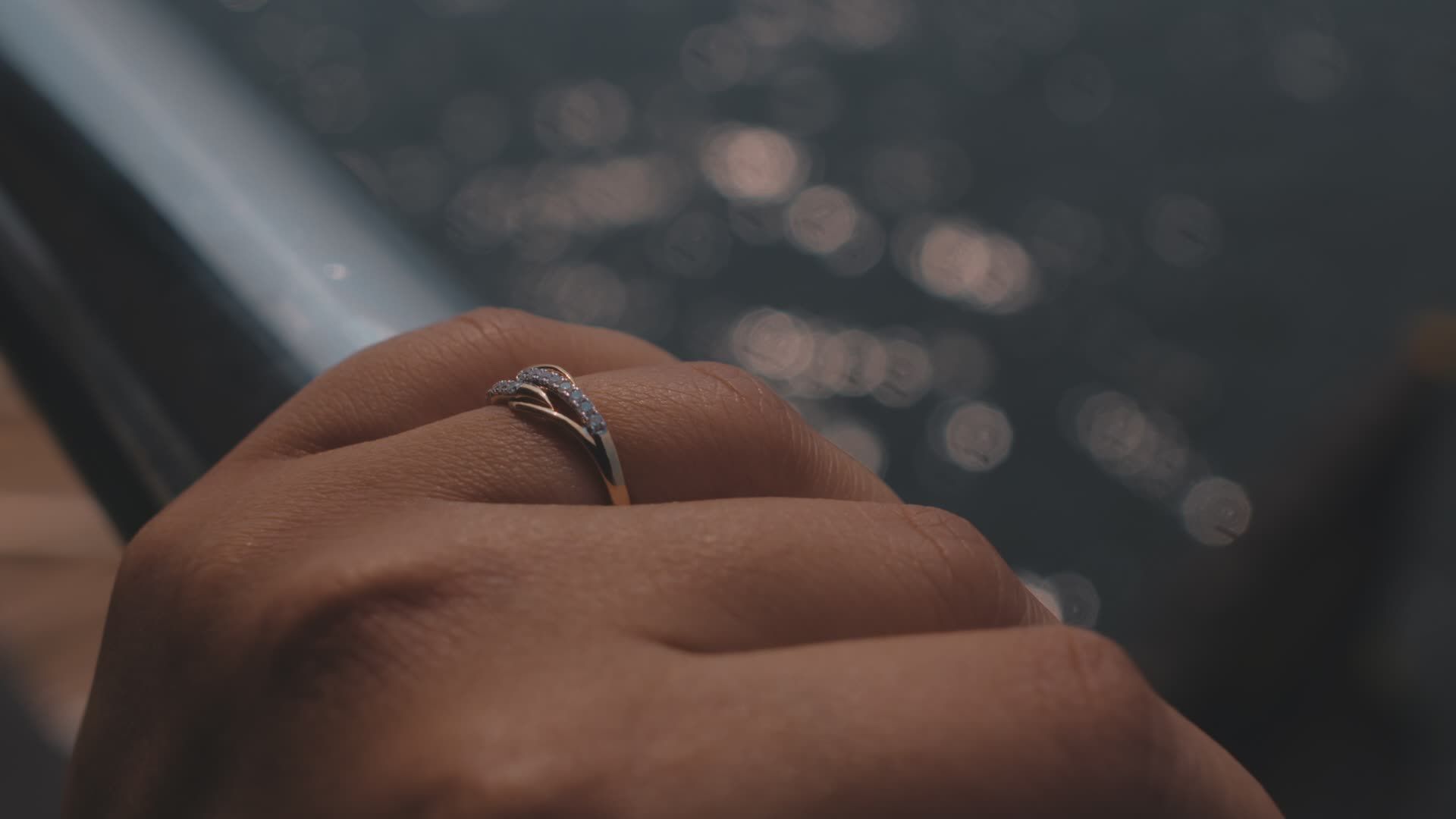
A tennis bracelet is a flexible bracelet made of a continuous line of individually set stones, traditionally diamonds of similar size. Each stone sits in its own small setting, linked to the next, so the bracelet moves smoothly and catches the light from every angle.
Where the name comes from
Such bracelets were once simply called line bracelets. The name "tennis bracelet" is popularly traced to an episode in which the tennis champion Chris Evert paused a US Open match to look for the diamond line bracelet she had dropped on the court.
What to look at
| Element | What to look for |
|---|---|
| Stones | Consistent size, colour and brilliance along the whole line |
| Setting | Four prongs show the most stone; three-prong and bezel settings change the look and the protection |
| Links | Smooth movement, no gaps, no stiff points |
| Clasp | A box clasp with at least one safety catch |
| Weight | Usually expressed as total carat weight |
Fit
A tennis bracelet should move freely without sliding far over the hand. Measure your wrist and add about 1 to 2 cm, depending on how loosely you like to wear it.
Care
Bracelets meet more knocks than any other piece. Check the clasp and the safety catch regularly, and have the stones inspected by a jeweller if the bracelet is worn every day. Read How to clean fine jewelry.
Choosing stone size
Tennis bracelets range from fine lines of very small stones to bold bracelets of larger ones. Smaller stones feel discreet and suit everyday wear; larger stones make a statement and are more exposed to knocks. The total carat weight tells you the combined weight, not the size of each stone, so ask for the size of individual stones too.
Stones and metals
| Choice | Consider |
|---|---|
| Natural diamonds | The classic choice; consistency across many stones affects price |
| Laboratory-grown diamonds | Diamond, often allowing larger stones for the budget |
| Moissanite | Strong fire; clearly described as moissanite |
| Coloured gems | Sapphires and rubies are durable; softer gems need more care |
| White metal | Emphasises colourless stones |
| Yellow or rose gold | A warmer, more vintage character |
Safety catches
The box clasp is the main closure: a tongue that clicks into a box. A safety catch, often a hinged figure-eight latch on the side, or a second clasp, prevents the bracelet from opening accidentally. On a piece with many stones, a secure double closure is worth insisting on.
Wearing it
A tennis bracelet can be worn alone, stacked with a watch or other bracelets, or matched with a tennis necklace. When stacking, remember that stones can scratch metals and other stones; a little space between pieces helps.
Sources: Gemological Institute of America (gia.edu), gem encyclopedia.
Frequently asked questions
How should a tennis bracelet fit?
With a little room: most people add about 1 to 2 cm to their wrist measurement so the bracelet moves without sliding far down the hand.
What does the carat weight of a tennis bracelet mean?
It is usually the total carat weight of all the stones combined.
Can I wear a tennis bracelet every day?
Yes, if it is well made. Check the clasp and stones regularly and take it off for sport and heavy work.
What is a tennis necklace?
The same idea as a tennis bracelet, as a necklace: a continuous line of individually set stones.


