


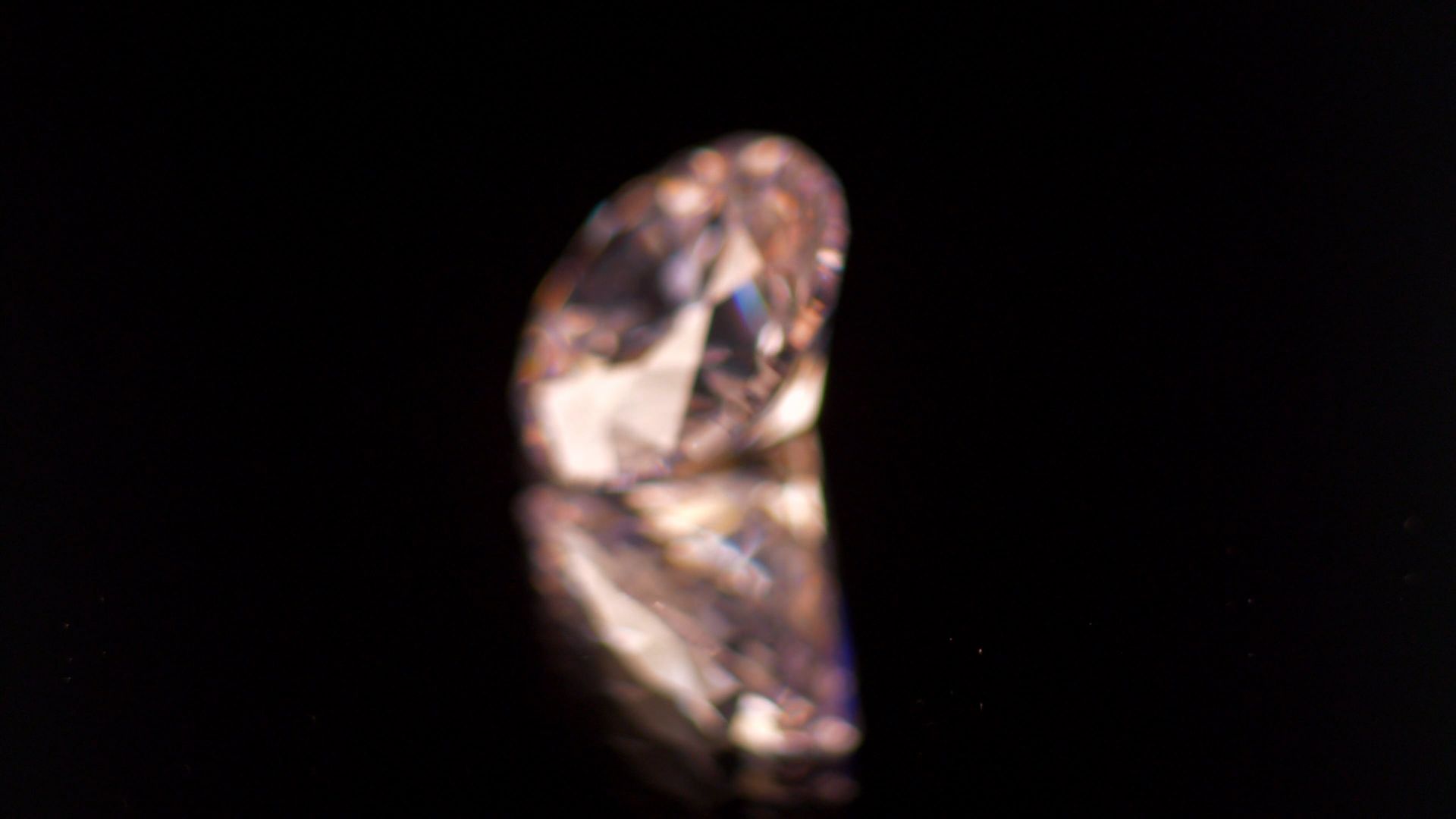
What moissanite is
Moissanite is silicon carbide. It takes its name from Henri Moissan, the French chemist who identified the mineral in the late nineteenth century in material from a meteorite crater. Natural moissanite is extremely rare, so the moissanite used in jewelry is created in laboratories.
How it looks
Moissanite has a higher refractive index than diamond and a much higher dispersion, which means it shows more fire: stronger flashes of spectral colour. It is also doubly refractive, so facets can appear doubled when viewed through the stone from certain angles.
How it compares
| Moissanite | Diamond (natural or lab-grown) | |
|---|---|---|
| Material | Silicon carbide | Carbon |
| Hardness (Mohs) | About 9.25 | 10 |
| Refractive index | About 2.65–2.69 | About 2.42 |
| Dispersion (fire) | About 0.104 | About 0.044 |
| Refraction | Double | Single |
Read Moissanite vs diamond and Moissanite vs lab-grown diamond.
How DORVETTI describes it
We call moissanite moissanite. We never describe it as a diamond or use the word diamond in a way that could suggest it is one. Where a moissanite stone comes with a report, its details appear on the product page.
Care
Moissanite is easy to care for. See How to clean moissanite.
Physical properties are typical published values for gem moissanite and diamond; individual stones may vary slightly.
Frequently asked questions
Is moissanite a fake diamond?
No. Moissanite is its own material, silicon carbide. It is not a diamond and should not be sold as one, but it is not a copy either.
Is moissanite durable enough for everyday wear?
Yes. Moissanite rates about 9.25 on the Mohs scale, harder than every gemstone except diamond.
Does moissanite look different from diamond?
Moissanite shows more fire (flashes of colour) than diamond and is doubly refractive, which an expert may notice when looking through the stone at certain angles.


