


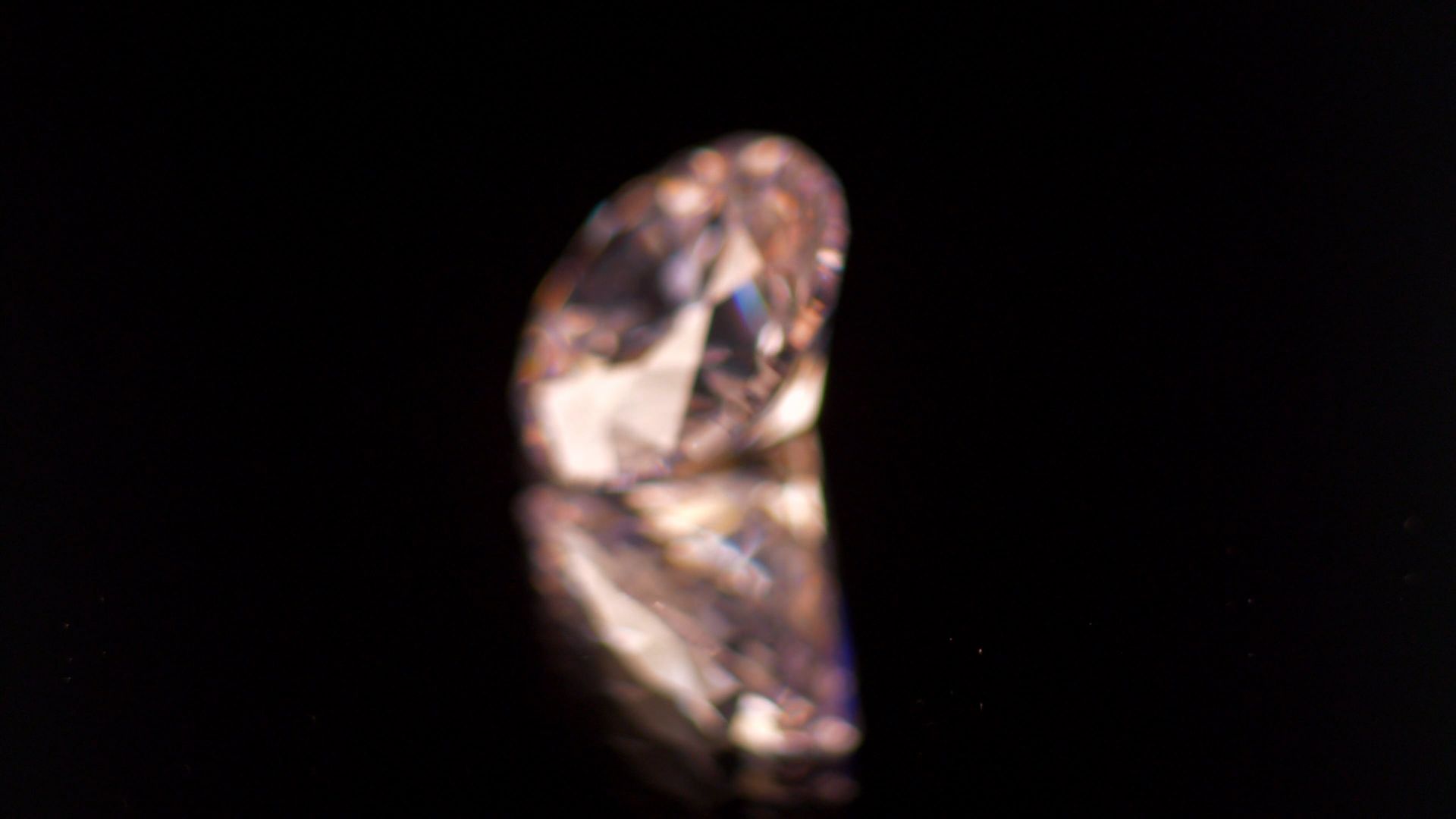
Shape describes a diamond's outline seen from above. It is different from cut quality, which describes how well the facets are proportioned. Shape is largely a matter of taste, but each one handles light differently and has its own practical points.
Brilliant and step cuts
Most shapes belong to one of two families. Brilliant cuts have many triangular and kite-shaped facets that break light into sparkle. Step cuts have long, parallel facets like steps, which create broad flashes of light and a calm, mirror-like effect, and which show a diamond's clarity more openly.
The shapes
| Shape | Style | Typical length-to-width | Good to know |
|---|---|---|---|
| Round brilliant | Brilliant, 57–58 facets | 1.00 | The most studied shape, designed for maximum brilliance |
| Oval | Brilliant | About 1.30–1.50 | Can make the finger look longer; check for a bow-tie |
| Cushion | Brilliant | About 1.00–1.20 | Soft, rounded corners; a romantic, vintage character |
| Princess | Brilliant | About 1.00–1.05 | Square with sharp corners that need protecting |
| Radiant | Brilliant | About 1.00–1.35 | Cut corners with a lively, crushed-ice sparkle |
| Emerald | Step | About 1.30–1.50 | Elegant and architectural; shows clarity clearly |
| Asscher | Step | About 1.00–1.05 | A square step cut with deep, layered reflections |
| Pear | Brilliant | About 1.45–1.75 | A drop shape; protect the point |
| Marquise | Brilliant | About 1.75–2.25 | Long and pointed; maximises apparent size |
| Heart | Brilliant | About 0.90–1.10 | Needs precise cutting for a clear outline |
Length-to-width ranges are common preferences, not rules. The right proportion is the one that looks right to you.
Practical points
- Points and corners, on princess, pear, marquise and heart shapes, are the most exposed areas. Settings with V-shaped prongs or a bezel protect them.
- Colour can gather at the ends of elongated shapes, so some people choose a slightly higher colour grade for them.
- Clarity matters more in step cuts, whose open facets make inclusions easier to see.
- Apparent size: elongated shapes can look larger than a round diamond of the same weight.
Choosing a shape for the hand
Elongated shapes, such as oval, pear, marquise and emerald, tend to make fingers look longer and slimmer. Round and cushion shapes look balanced on most hands. Square shapes, such as princess and asscher, have a crisp, geometric character. There are no rules: try shapes on the finger if you can, or look at photographs of rings on hands similar to yours.
Shape and setting
| Shape | Settings that suit it |
|---|---|
| Round | Almost any: solitaire, halo, three-stone, bezel |
| Oval, cushion | Solitaire, hidden halo, halo, east-west settings |
| Emerald, asscher | Four-prong or double-claw solitaire; three-stone with step-cut side stones |
| Pear, marquise | V-prongs or bezel to protect the points |
| Princess | V-prongs on the corners; bezel for active lives |
Shape and budget
Round brilliants usually cost more per carat than fancy shapes of similar quality, partly because cutting a round stone from a rough crystal typically wastes more material. Fancy shapes, particularly elongated ones, can also look larger for their weight. If size matters within a fixed budget, a fancy shape is worth considering.
Shape and durability
Sharp corners and points are the most vulnerable parts of any diamond. Shapes with cut corners, such as radiant and cushion, and settings that cover the points reduce the risk of chipping.
Sources: Gemological Institute of America (gia.edu), the 4Cs of diamond quality and GIA grading scales.
Frequently asked questions
Which diamond shape sparkles most?
The round brilliant is designed to maximise brilliance. Brilliant-style fancy shapes such as oval, cushion and radiant also sparkle strongly; step cuts show a calmer, mirror-like play of light.
What is the bow-tie effect?
A dark area across the centre of some elongated shapes, such as ovals, pears and marquises. Its strength depends on the cut; look at the stone before choosing.
Which shape looks biggest for its weight?
Elongated shapes such as marquise, oval and pear generally show more surface from above than a round diamond of the same weight.
Why are round diamonds more expensive?
Demand is high and cutting a round brilliant from a rough crystal usually loses more material than cutting many fancy shapes.


