


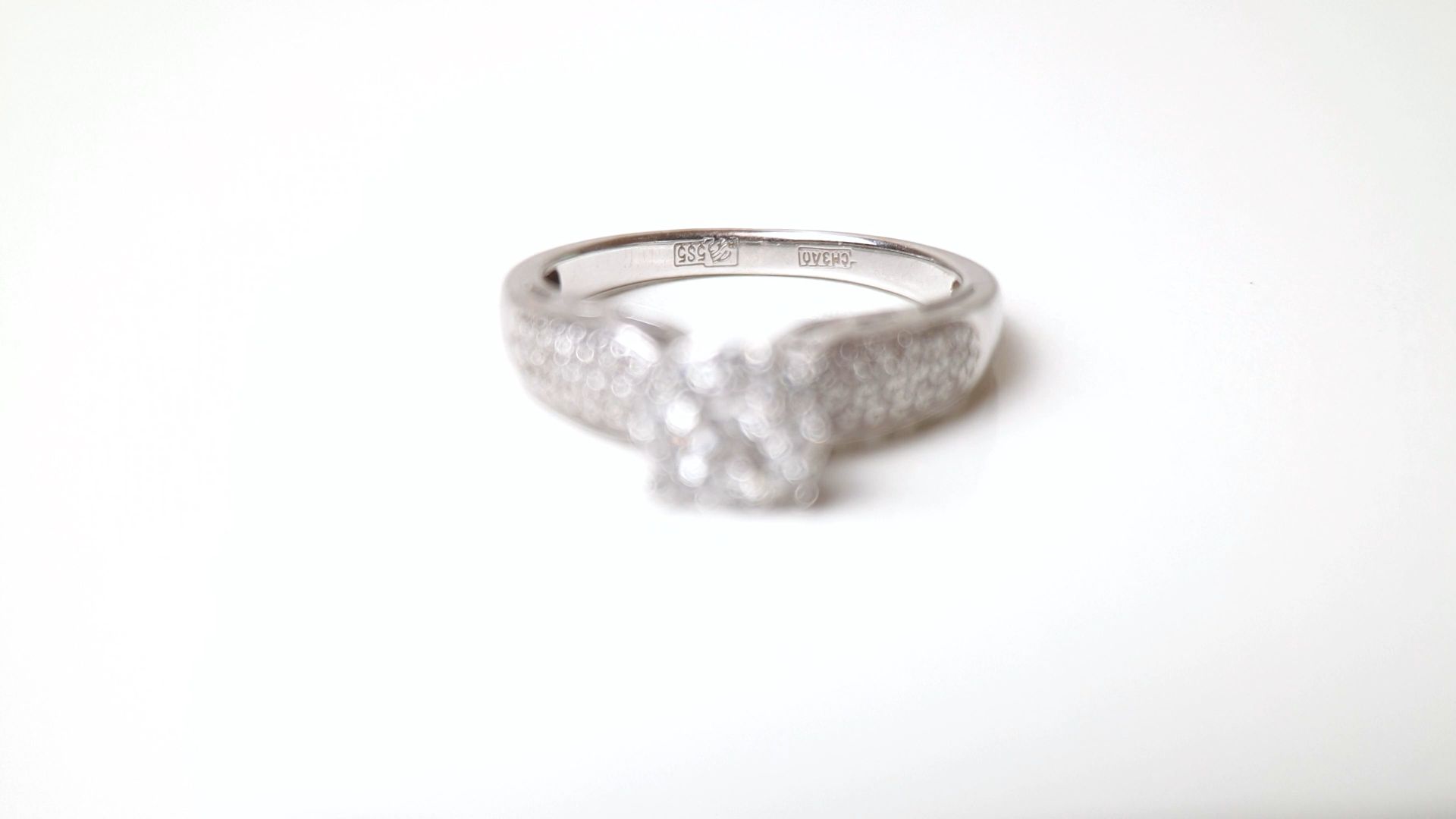
White gold and platinum look similar when new, and both are excellent for rings. They differ in what they are made of, how they age and how much care they need.
Side by side
| White gold | Platinum | |
|---|---|---|
| Composition | Gold alloyed with white metals, usually rhodium-plated | Typically 95% platinum (950) |
| Colour | Bright white while the rhodium is intact | Naturally grey-white |
| Weight | Lighter | Noticeably heavier; platinum is very dense |
| How it wears | Rhodium wears over time; tiny amounts of metal are lost | Metal is displaced rather than lost; develops a patina |
| Maintenance | Periodic re-plating | Occasional polishing, if you prefer a bright finish |
| Skin sensitivity | Depends on the alloy; some contain nickel | Generally well tolerated |
Price
Prices depend on metal markets, which move, and on weight. Because platinum is much denser and is used at high purity, a platinum ring contains more precious metal than the same ring in gold. Compare finished pieces rather than metal prices.
How to choose
- Choose platinum for a naturally white metal that needs no plating, and if you like a substantial feel.
- Choose white gold for a bright white finish, a lighter feel and, often, a lower price.
- Pair rings worn together in the same metal so they wear evenly.
Rhodium plating, explained
Rhodium is a bright, white metal of the platinum family. A thin layer of it gives white gold its crisp white finish. With wear, especially on the underside of rings, the plating thins and the slightly warmer colour of the alloy beneath begins to show. A jeweller can clean and re-plate the piece. How often depends on the ring and how it is worn.
Repairs and resizing
Both metals can be resized and repaired. Platinum requires higher temperatures and specialised skills, so work on platinum can take longer. Ask about aftercare before you buy.
Prongs
Platinum is often used for prongs, even on gold rings, because it holds stones securely and wears slowly. For colourless diamonds on yellow gold rings, white prongs also keep the stone looking white.
Sensitive skin
Platinum used in jewelry is typically 95% pure and generally well tolerated. White gold alloys vary: some are made with palladium and contain no nickel; others contain nickel. If you react to certain metals, ask exactly what the alloy contains.
Which suits whom
- Platinum suits those who want a naturally white metal, like a weighty feel and prefer less maintenance of the colour.
- White gold suits those who want a bright white finish, a lighter ring and often a lower price, and do not mind occasional re-plating.
Sources: Gemological Institute of America (gia.edu), gem and jewelry care guidance.
Frequently asked questions
Does white gold turn yellow?
Its rhodium plating can wear, revealing the slightly warmer alloy underneath. Re-plating restores the bright white finish.
Is platinum scratch-proof?
No. Platinum scratches, but the metal is displaced rather than lost, forming a soft patina that can be polished.
How often does white gold need re-plating?
It depends on the piece and how it is worn. Rings worn daily need it more often than earrings or pendants.
Is platinum stronger than gold?
Platinum is dense and durable, and it holds stones securely. It still scratches, but the metal tends to be displaced rather than lost.


