


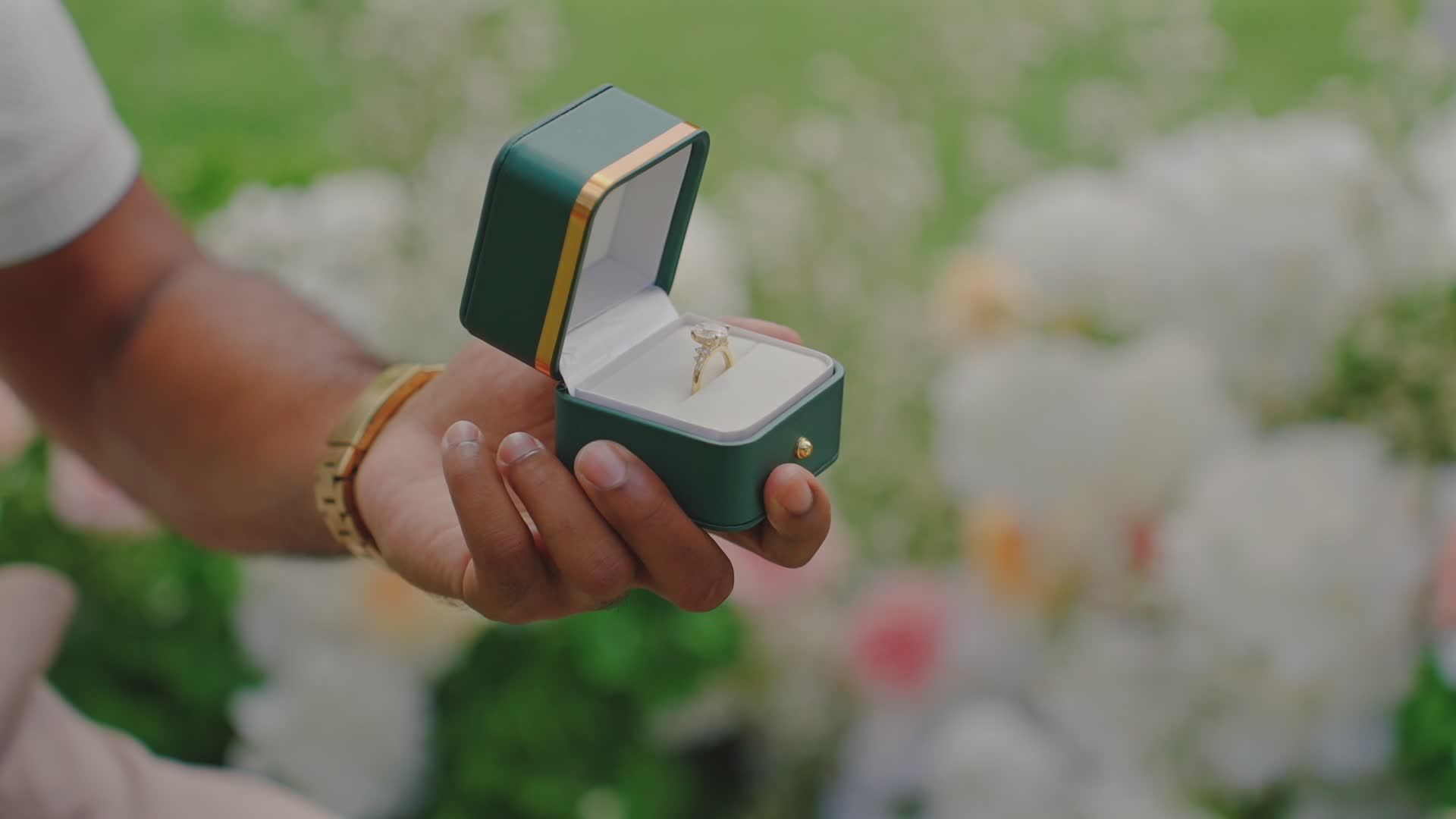
The honest answer is: as much as you are comfortable spending, and no more. An engagement ring should mark the start of a shared life, not a financial strain on it.
Where the salary rules come from
Formulas such as "one month's salary" or "three months' salary" are often repeated as tradition. They were popularised by twentieth-century advertising campaigns, not by custom. Your budget depends on your circumstances and your priorities, not on a formula.
Setting a budget that is yours
- Start from what you can pay without borrowing more than you are comfortable with.
- Remember other costs: resizing, engraving, insurance and the wedding band.
- Decide what matters most: the stone's size, its quality, its origin or the design.
Where the money goes
In most diamond engagement rings, the centre stone accounts for the largest part of the price. The setting, the metal and any side stones make up the rest. Precious-metal prices also move with the markets.
Making a budget go further
| Choice | Why it helps |
|---|---|
| Prioritise cut | A well-cut stone sparkles more and can look larger |
| Near-colourless (G–J) | Often looks white once set, especially in yellow or rose gold |
| Eye-clean clarity | Avoids paying for differences only visible under magnification |
| Just below round weights | A 0.90 ct stone can look almost identical to 1.00 ct and cost less |
| Elongated shapes or a halo | Can look larger than a round stone of the same weight |
| Laboratory-grown diamond or moissanite | More size for the same budget; always clearly disclosed |
Prices in Europe
For consumers in the European Union, prices shown for goods must include VAT. Check whether duties or other charges may apply when a piece is shipped from outside the EU.
This article is general information, not financial advice.
The total cost of a ring
The price on the label is not the only cost. Consider:
- Resizing, if the size is not right the first time.
- Engraving, if you want a date or a message.
- Insurance, usually an annual premium.
- Maintenance, such as re-plating white gold or re-tipping worn prongs over the years.
- The wedding band, which is often chosen to match.
Deciding where to spend
Think of the budget as a set of choices. More for the stone usually means a simpler setting; a more elaborate design may mean a smaller stone. Some people prioritise the centre stone because it can be reset later; others prefer an exceptional design around a modest stone. Both are sound approaches.
A note on financing
Paying in instalments can make a purchase manageable, but it adds cost and commitment. Read the terms carefully and borrow only what you are comfortable repaying. This is general information, not financial advice.
Timing and prices
Diamond and precious-metal prices change over time. Rather than trying to time the market, decide what you want, compare carefully and buy when the ring is right.
Sources: General consumer guidance; no single industry standard exists for engagement ring budgets.
Frequently asked questions
Is the three months' salary rule real?
No. Salary-based rules come from twentieth-century advertising campaigns. The right budget is the one you are comfortable with.
How can I get a larger-looking stone for my budget?
Prioritise cut, consider near-colourless grades, choose a weight just below a round number, or consider an elongated shape, a halo, a laboratory-grown diamond or moissanite.
Should the ring cost as much as the proposal or the wedding?
There is no relationship between them. Each couple decides how to spread their budget.
Is it better to spend on the stone or the setting?
It depends on your priorities. A stone can be reset later, while a remarkable setting can make a modest stone look exceptional.


