


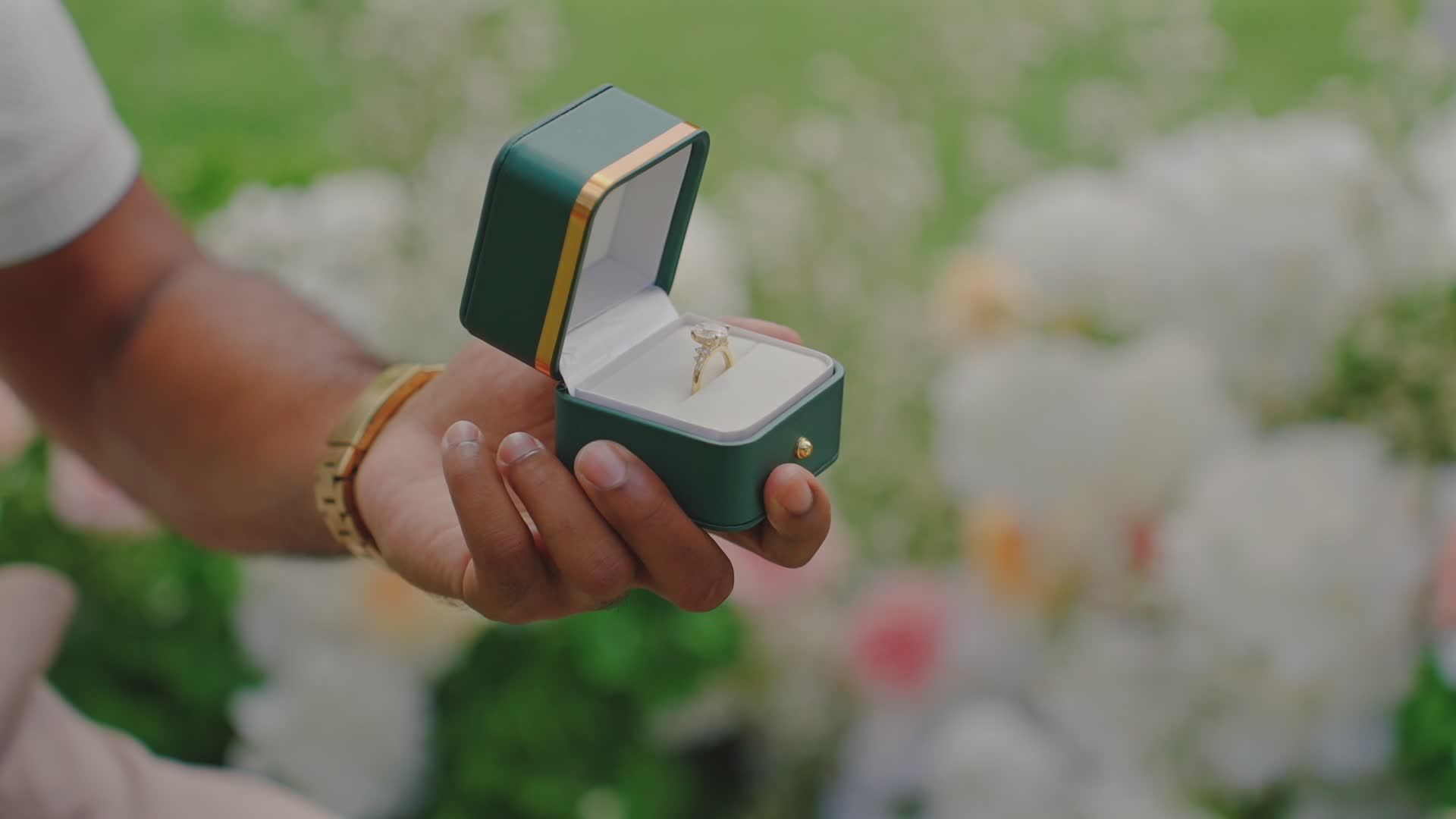
The setting is the part of the ring that holds the stone. It shapes how the ring looks, how secure the stone is and how much care the ring needs. There is no universally best setting; there is the one that suits the stone, the hand and the way the ring will be worn.
The main styles compared
| Style | What it is | Strengths | Consider |
|---|---|---|---|
| Solitaire | A single stone on a plain band, usually held by four or six prongs | Timeless; puts the stone first | High settings can catch on fabric |
| Halo | A ring of small stones around the centre stone | More presence and sparkle; the centre can appear larger | More small stones to check |
| Hidden halo | Small stones set beneath the centre stone, visible from the side | Discreet sparkle; a clean top view | Detail is seen mainly in profile |
| Three-stone | A centre stone between two side stones | Balanced and symbolic | Side stones add to the budget |
| Pavé | Small stones set closely along the band | Brilliance along the band | More complex to resize |
| Bezel | A rim of metal surrounds the stone | Very secure; modern; suits active lives | Covers a little of the stone's edge |
| Cluster | Several small stones grouped to form one shape | A large look for a moderate budget | Many settings to maintain |
| Toi et moi | Two stones side by side | Personal and distinctive | Balance between the two stones matters |
| Vintage-inspired | Details such as milgrain edges and engraving | Character and craftsmanship | Fine detail needs gentle cleaning |
Prongs, heights and profiles
- Four prongs show more of the stone; six prongs hold it more securely and make a round stone look rounder.
- V-shaped prongs protect the points of pear, marquise and princess shapes.
- Setting height: a high setting lets in light and makes the stone prominent; a low setting is more practical and pairs more easily with a wedding band.
- Cathedral shoulders rise to meet the head of the ring, adding elegance and height.
Choosing for real life
Think about daily routines. Someone who works with their hands may prefer a bezel or a low setting; someone who wants maximum sparkle may prefer a halo or a fine four-prong solitaire. Consider also whether a wedding band will sit beside it; read How to choose wedding bands.
Matching the setting to the stone
Some pairings are classic for good reasons. Round brilliants suit almost any setting. Ovals and cushions look especially graceful in a solitaire or a hidden halo. Emerald and asscher cuts are often set with four prongs or double claws that frame their corners, sometimes flanked by step-cut side stones. Pears, marquises and princess cuts need their points protected with V-shaped prongs or a bezel.
White prongs on yellow gold
A colourless diamond set in yellow gold can pick up a warm reflection from the metal. For that reason, some yellow gold rings hold the stone in white gold or platinum prongs, keeping the band warm and the stone white. It is a design choice, not a rule; warmer stones often look beautiful in yellow gold throughout.
Maintenance by setting
| Setting | What to check |
|---|---|
| Prong solitaire | Prong tips for wear; the stone should not move |
| Halo and pavé | Small stones and the tiny beads of metal holding them |
| Bezel | The rim for dents after knocks |
| Tension-style and unusual settings | Ask the maker about inspection and resizing before buying |
Comfort in profile
Look at a ring from the side as well as from above. A high cathedral setting is striking but can catch on gloves and knitwear; a low basket keeps the stone close to the finger. The shoulders, the width of the band and the underside of the setting all affect comfort in daily wear.
Sources: Gemological Institute of America (gia.edu), engagement ring setting styles.
Frequently asked questions
Which setting is the most secure?
Bezel settings, where metal surrounds the stone, offer the most protection. Six prongs hold a stone more securely than four.
Which setting makes the stone look bigger?
A halo adds visible surface around the centre stone, and fine prongs let more of the stone show.
Can I change the setting later?
Often, yes. A stone can usually be reset into a new design, although some settings are easier to rework than others.
Which setting is easiest to pair with a wedding band?
A solitaire with a setting high enough for a straight band to sit underneath, or a low setting paired with a contoured band.


