


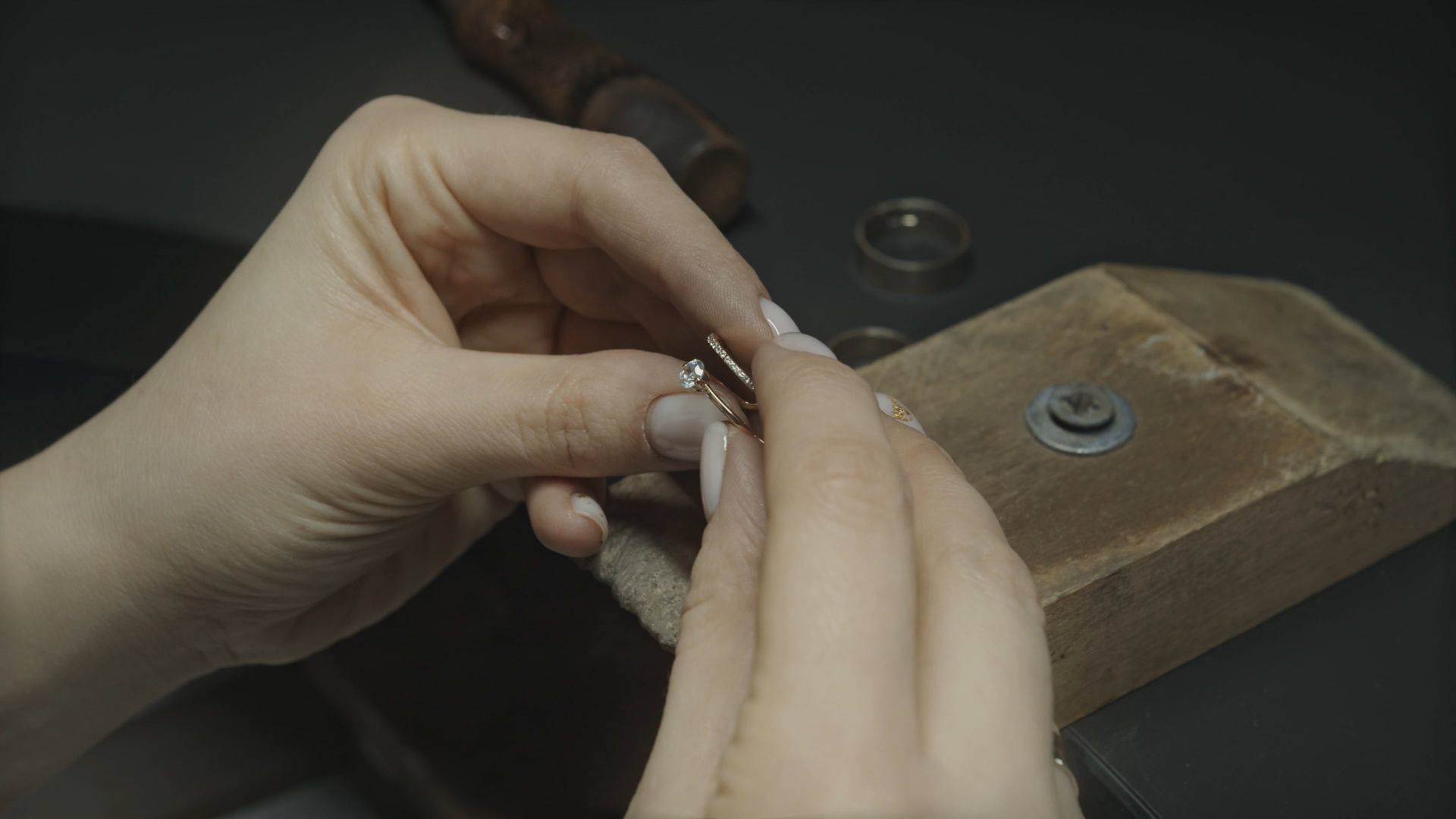
A bespoke piece is designed from your ideas and made to specifications agreed with you. It is different from choosing a size, a metal or a stone from a set of options, which is personalisation. Bespoke begins when the design itself is yours.
When bespoke makes sense
- You have an idea that you cannot find anywhere.
- You want to mark a story, a place or a date in the design itself.
- You have a stone, perhaps inherited, that deserves a new setting.
- You need a particular fit: a ring that sits flush beside another, or an unusual size.
How a commission unfolds
At DORVETTI, a commission follows seven steps.
- Conversation: the person, the occasion, the way the piece will be worn.
- Direction: its character, silhouette, proportions and references.
- Design: a proposal you can see and refine.
- Materials: metal and stones, with full disclosure of what each one is.
- Approval: design, specification and price confirmed in writing.
- Creation: the piece is made to the agreed specification and checked.
- Delivery: with the documentation that corresponds to it.
Timing and cost
Both depend on the design, the metal and the stones. A trustworthy maker will not promise a date or a price before understanding the piece, and will give you both in writing before work begins.
Using your own stone
Bring any documentation you have. The maker will need to assess the stone's condition and durability before recommending a setting.
What to agree in writing
- The final design, including measurements and materials.
- The price, deposits and payment schedule.
- The expected timing.
- Returns: in the EU, goods made to the consumer's specifications or clearly personalised can be excluded from the 14-day right of withdrawal. The legal guarantee of conformity still applies.
This article is general information and does not constitute legal advice.
Preparing your brief
- Who the piece is for and what it marks.
- How it will be worn: every day, occasionally, alongside other pieces.
- References: images, objects, colours, places, or simply words.
- What you already know: metal, stone, size.
- Your timing and a budget range, if you are comfortable sharing it.
From drawing to model
Designs are often developed as sketches and then as digital models, which let you see proportions from every angle. For some pieces, a physical model in wax or resin can be made to check scale on the hand before the final piece is produced.
Sourcing stones
For significant stones, several options may be presented, each with its description and, where appropriate, a report. Take time to compare; the stone often determines the final proportions of the design.
Common pitfalls
- Changing the design after approval, which adds time and cost.
- Choosing details too fine to survive daily wear.
- Leaving sizing until the end.
- Not agreeing timing and conditions in writing.
Aftercare
A bespoke piece deserves the same care as any fine jewelry: regular cleaning, periodic checks of settings and safe storage. Keep the design records and documentation together; they help with future repairs and resizing.
Sources: Directive 2011/83/EU on consumer rights, article 16 (exceptions to the right of withdrawal).
Frequently asked questions
Is bespoke always more expensive?
Not necessarily. Price depends on the metal, the stones and the complexity. A simple bespoke design can cost less than an elaborate ready-made piece.
Can I return a bespoke piece?
Goods made to the consumer's specifications can be excluded from the EU right of withdrawal. The legal guarantee of conformity still applies. The terms should be agreed in writing before work begins.
Do I need a clear idea before starting?
No. Many commissions begin with a feeling, a reference or an occasion; developing the idea is part of the process.
Can bespoke work with a small budget?
Often, yes. The design can be adapted to the materials and budget available.


