


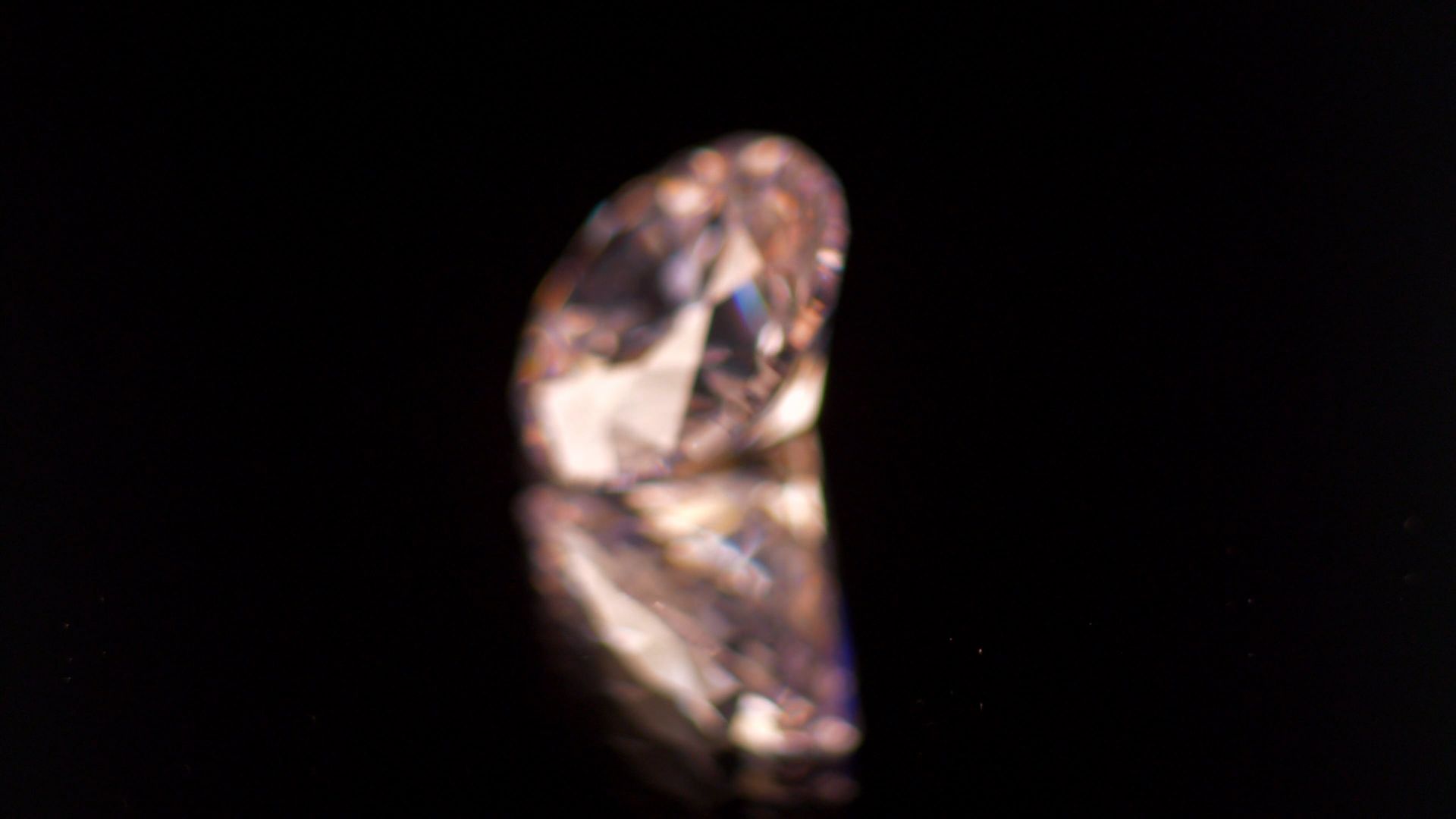
Moissanite is silicon carbide (SiC), a gemstone valued for its brilliance, its fire and its hardness. It is not a diamond and not a type of diamond: it is a different material with an identity of its own.
Where it comes from
In 1893, the French chemist Henri Moissan examined samples from a meteorite crater in Arizona and found tiny, brilliant crystals. He first believed they were diamonds; they proved to be silicon carbide, and the mineral was later named moissanite in his honour. Natural moissanite is extremely rare and occurs only in minute crystals, so the moissanite used in jewelry is created in laboratories. It was introduced to the jewelry market in the late 1990s.
Its properties
| Property | Moissanite | What it means |
|---|---|---|
| Hardness (Mohs) | About 9.25 | Harder than every gemstone except diamond; suited to daily wear |
| Refractive index | About 2.65–2.69 | Very bright |
| Dispersion | About 0.104 | Strong fire: flashes of spectral colour |
| Optic character | Doubly refractive | Facets can appear doubled when viewed through the stone at an angle |
| Specific gravity | About 3.2 | Lighter than diamond for the same size |
How it is sized
Because moissanite is lighter than diamond, a moissanite of the same diameter weighs less. It is therefore often described by its dimensions in millimetres, or by a "diamond equivalent weight" that refers to the size of a diamond of the same diameter. Read the description carefully and compare millimetres when in doubt.
Colour and grades
Moissanite is available in colourless and near-colourless qualities, as well as in colours. There is no single independent grading system for moissanite comparable to the diamond 4Cs; grades are usually set by producers.
How DORVETTI describes it
Moissanite is always named as moissanite. It is never described as diamond, and the word diamond is never used in a way that could suggest otherwise.
Moissanite is not a simulant of lesser quality
Moissanite is sometimes grouped with diamond simulants because it can resemble diamond. It is better understood as a gemstone in its own right, with properties that differ from diamond's and from those of cheaper imitations such as cubic zirconia and glass. It is much harder than both, it keeps its polish and brilliance, and it does not cloud with age.
Durability in real life
With a hardness of about 9.25, moissanite resists scratches from everyday materials very well. It also stands up well to everyday wear, although any stone can chip if struck hard at a vulnerable point. Moissanite has high heat resistance, which helps during jewelry repairs, but the metal and any other stones in the piece still need appropriate care.
Why people choose it
- For its fire: strong flashes of colour, especially in sunlight.
- For its durability, suited to rings worn every day.
- For its price, which allows larger stones or more elaborate designs.
- Because it is created in laboratories and does not depend on mining.
Questions to ask
- What is the stone's size in millimetres, and its weight or diamond equivalent weight?
- What is its colour grade, and who assigned it?
- Is there a document describing the stone?
- Is the moissanite clearly named as such on the invoice?
Sources: Gemological Institute of America (gia.edu), gem encyclopedia and identification notes on synthetic moissanite.
Frequently asked questions
Is moissanite natural?
Natural moissanite exists but is extremely rare and found only in tiny crystals. Moissanite used in jewelry is created in laboratories.
Will moissanite pass a diamond tester?
Some basic thermal testers can register moissanite as diamond. Testers that also measure electrical conductivity, and laboratories, distinguish the two.
Does moissanite get cloudy?
No. Like any gemstone it can look dull when coated in oils and dirt; cleaning restores it.
Is moissanite a good choice for an engagement ring?
Yes, for many people. It is very hard, brilliant and suited to daily wear. It is a different stone from diamond and should be chosen for what it is.
Does moissanite scratch?
It is very scratch-resistant, harder than every gem except diamond, but it can chip if struck hard.


